-
Truth
Some things strike me immediately as making sense.
What I know to be false, is that there is ‘the Truth’. You can get very close in maths and physics but they’re not nearly so messy as all of what mother nature cooked up.
I’ve been reading through Bear Grylls’ “Soul Fuel”, as a way of getting insight into how inspired people get their inspiration. It is a very open love letter to the Bible, although with some interesting details appearing amongst it.
However I find myself strongly disagreeing with some of the passages from the Bible. Where God will instruct you on the small things of life – whether you should do your business ‘above board’ – what does that even mean? Not paying tax?
My brain screams at all the waffle words. Generic stuff that followers of Christ seem to make up to somehow make God sound more powerful.
Even Martin Luther King, who gives a wonderful description of the Measure of Man through a story in the Bible, interprets the story in his own way, that might or might not be the actual meaning. God says there’s three dimensions, King gets to decide what each of those dimensions mean. I can make up my own scale:
- Ability to laugh
- Ability to raise children
- Ability to mime
Now obviously King has far more credibility than me for making up the dimensions – but it’s still making them up. It’s not based on any evidence. Is there really only 3 dimensions? Are there more are there less? Every explanation that someone comes up with is just a complete mess of ‘maybes’, ‘perhaps’, ‘in this case’, ‘for these people’, ‘at this time’.
How truthful are psychological studies? That psychological study you read needs a small print list of who exactly this study is relevant for. Like health warnings on food, they should all include – what continent (and for extra credit, what country, city and neighbourhood please), what age range, what religious beliefs, what sex, what education, what privileges, what what what.
So finally I come across something I agree with, and it’s so clear that it jumps out of the page. I don’t have to cross examine what each of the terms mean. It explains in 10 easy steps that its practically bloody impossible for you and me to have the same view on what the ‘Truth’ is:
- Different animals manifest different modes of perception;
- Similar differences are seen among individual men;
- For the same man, information perceived with the senses is self-contradictory
- Furthermore, it varies from time to time with physical changes
- In addition, this data differs according to local relations
- Objects are known only indirectly through the medium of air, moisture, etc.
- These objects are in a condition of perpetual change in colour, temperature, size and motion
- All perceptions are relative and interact one upon another
- Our impressions become less critical through repetition and custom
- All men are brought up with different beliefs, under different laws and social conditions
I’m not a fan of ‘manifest different modes of perception’ – that’s basically ‘we all perceive differently’? But the rest of the language used is clear and simple.
So as I understand it, most people barely consider how other people perceive stuff and that’s the first layer of incomprehensible hell.
This is why my brain screams each time the economists dream up their ‘average human’ and build entire societies on what this average human wants.
Aenesidemus argues that truth varies infinitely under circumstances whose relative weight cannot be accurately gauged.
We don’t know and we can’t measure.
There is no universal ‘Truth’.
I maintain that Truth is a pathless land, and you cannot approach it by any path whatsoever, by any religion, by any sect.
– Krishnamurti dissolution speech -
Life is a poem
Lewis says in Miracles, “we should prefer to think that all nations and individuals start level in the search for God, or even that all religions are equally true. It must be admitted at once that Christianity makes no concession to this point.”
– Chose for the Unchosen – C.S. Lewis websiteThis is what I liked about Allah, he makes no difference in which religion. That one God is the same as Allah.
Those who believe and those who are Jews and Christians and Sabians, (star worshippers), whoever believes in Allah and the Last Day and does righteous deeds shall have their reward with their Lord. On them will be no fear nor shall they grieve.
– Qur’an (2:62) / https://en.m.wikipedia.org/wiki/Islam_and_secularism#Scriptural_basisAll religions are equally true and in that turn, equally false. No one religion is perfect, which is why a church can’t claim to have the infallible truth. It can have its approximation of the truth. Science has its own approximation of the truth.
A final note:
“In science we have been reading only the notes to a poem,” Lewis says, “but, in Christianity we find the poem itself.”
I like the idea that life itself is a poem, but I don’t believe that religion is actually the poem, its like a painting of the poem. Maybe not a painting, just what the poem left behind in our imaginations, or the stories we tell of the poem.
-
No doubt Jesus laughed a lot
No doubt Jesus laughed a lot
– Soul Fuel, ch. 21, Bear GryllsCan we keep it that simple please? Not wrap it up in happiness/joy/“really-fun-guy”. He laughed. I mean I like and understand the good intentions of happiness and Joy but then there’s lots of questions about what is happiness and joy. Laughing, is an image we can all hold in our heads. There’s laughing with someone rather than at someone, but again I think we can all separate those quite clearly. I fully believe that Jesus laughed with people and probably laughed at himself.
Somehow, I can’t picture Jesus laughing. I don’t think I’ve seen him doubled over, tears streaming down his cheeks laughing. Couldn’t Michelangelo have painted that? Why do we have Rodin’s Thinker and not not a beautiful bronze statue of Jesus the Joker?
I took a photo of The Thinker’s arse. Would Jesus approve?
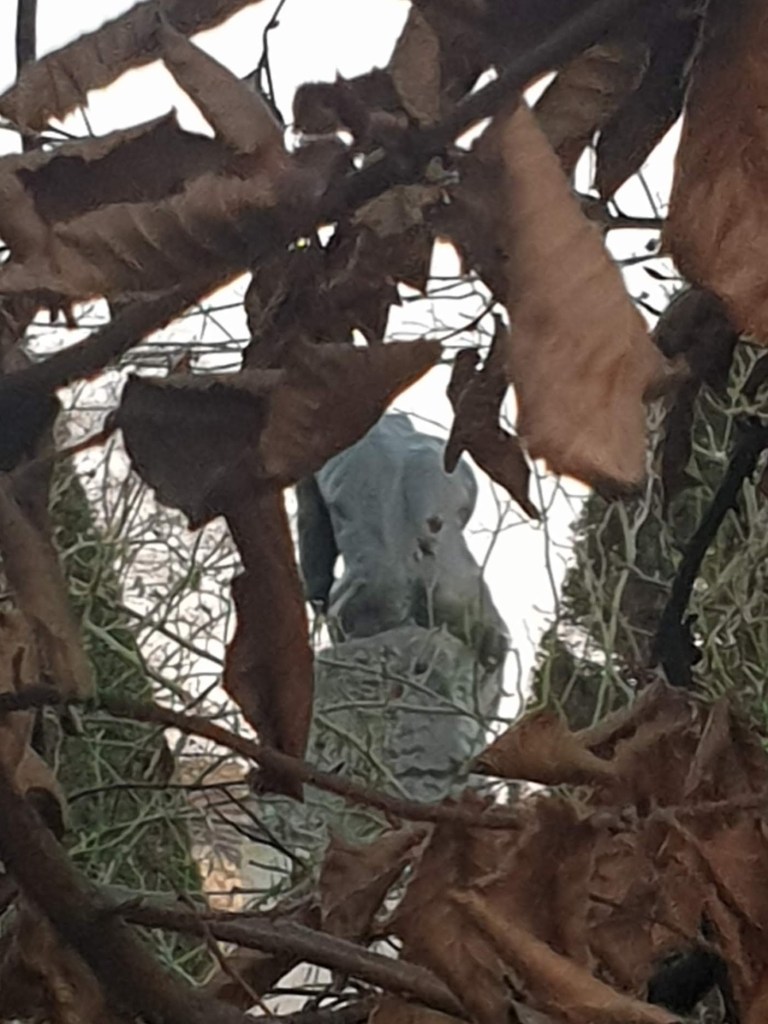
Did he like fart jokes? Did he have good comedy timing? Would he have laughed at the Life of Brian? Would he snigger if someone said “Biggus diccus”?
Maybe practical jokes were his thing. Was his water-wine trick his only party trick?
Then why, if he laughed so much, and I agree he probably did, is almost everyone from the church so boring and serious? Why the robes? Why the upset if someone heckles your chosen God?
My current guess is that comedians are much closer to heaven than most of the clergy.
😇
-
The eternal law of the animals
Tolstoy explains beautifully as ever, the hypocrisy of Christians at war.
“There are in Europe twenty-eight millions of men under arms,” says Wilson, “to decide disputes, not by discussion, but by murdering one another. That is the accepted method for deciding disputes among Christian nations.
– The Kingdom of God is within you, p127, Leo Tolstoy
…
either Christianity is a failure, or those who have undertaken to expound it have failed in doing so.
…
I dared in the presence of forty persons to moot the proposition that war was incompatible with Christianity; I was regarded as an arrant fanatic. The idea that we could get on without war was regarded as unmitigated weakness and folly.”Of course the number one Christian commandment is “Thou shalt not kill”, but indeed it is more nuanced than that. Killing animals is clearly permitted. Further Tolstoy gives a slightly more refined version:
“One of the first precepts of the eternal law inscribed in the consciences of all men,” says the Abbe Defourney, “is the prohibition of taking the life or shedding the blood of a fellow creature without sufficient cause, without being forced into the necessity of it.”
– The Kingdom of God is Within You, p128, Leo TolstoyThis language is the problem. There is too much wiggle room for ‘necessity’ and ‘sufficient cause’. It was necessary and there was sufficient cause for the Jews to be killed according to the Nazis. You can argue with them, but it’s their government’s word against yours.
So let’s look at why animals kill. Animals kill through instinct, they kill for food for themselves and their family. If they’re not hungry they don’t kill. They might kill in self defence, through poison mostly. We are above the animals, so that should be a minimum. But we kill because we want to or are told to. For sport, for convenience, for war, for no reason at all.
So let’s refine this holy law. How about “only kill for food or self-defence.”? Animals, almost entirely, obey this. So you’re free to ignore this law but then don’t pretend like you’re better than the animals. You’re breaking the eternal law of the animals. If you want to go to war for oil, or because they’re hiding WMDs, go ahead. But remember that then you’re less than the animals. Dress it up in whatever moral right you believe you have, but an animal that follows this eternal law would not do this. We’re animals too. We’re sensible monkeys, but no more. We’re not Gods, we don’t get an exception because we’re smarter. The monkey’s don’t get more exceptions than other animals because they’re smarter than other animals.
Then the only reason to plan to kill a human is if you’re a cannibal, and of course you’re not a cannibal are you? Consider what Guy de Maupassant had to say:
“When cannibalism is spoken of, we smile with pride, proclaiming our superiority to these savages. Which are the savages, the real savages? Those who fight to eat the conquered, or those who fight to kill, for nothing but to kill?”
– The Kingdom of God is within you, p150, Leo TolstoyNow Christianity doesn’t allow for killing in self-defence. It is the law of non-resistance to violence. So that argument is out too if you’re a Christian. I agree with the non-resistance to violence. It is perhaps the one law that could lift us above the animals. But that’s a discussion for another time.
So that’s it…
Thou shalt not kill any creature unless… it is for food or self-defence.
Everything else is right out. Except for those Alien like parasitic wasps that lay their eggs inside some poor host for their kids to eat. I guess that’s kind of food… but Jesus wasps, can you keep that shit to a minimum please. I hope amongst my sarcasm, you will realise that I understand that this law is just my mental fumbling and there will be many exceptions for it, but I’m still very much beginning my philosophy around this. I hope to update and refine these basic thoughts over time.
-
Satan’s delusion
The greatest trick the devil pulled is not to convince people he didn’t exist, it’s to convince himself he didn’t exist. There’s an excellent UK comedy sketch from Miller and Webb of a Nazi asking his commander if maybe they’re the bad guys. The film Conspiracy too shows it. Its just a business meeting to discuss a solution to the Jewish problem. There’s no question around the table that they might be judged badly in history.
Trump doesn’t think he’s a bad guy, Putin doesn’t think he’s a bad guy. Mao, Stalin, Hitler, Mengele, Pinochet, Mugabe slept peacefully at night. They were the good guy’s in their head. They were the patriots, doing it for their country, or whatever other reason they had.
But the devil is very real. And there’s more than one, they’re just waiting for the chance. The devil won’t have a red pointy tail. He probably won’t even have ‘Lucifer’ as his last name. But like Damien, he will be human. The closer we bring our earth to hell, the more power the next Satan will wield.
-
Secular Islamic countries
Too often when people think about Islamic countries they think of those involved in war. Iraq, Iran, Pakistan, Afghanistan.
In all these countries, they have religious rulers. Religion rules the state.
Europe used to have this too. We burned witches and heretics. We burned, tortured, punished and cleansed.
But through things like the French revolution and the slow desire to stop the internal bloodshed, Europe separated religion from the state and protected the freedom of religion through the state instead. This didn’t stop all wars, but it eroded the unnecessary burning and torturing of individuals.
Islam has a fundamental belief in the freedom of religion. That anyone is free to believe their own religion and people can only be converted to Islam through reason not through force.
So secularism and Islam actually fits very well. It just happens that about the only secular Muslim country Europeans know about is Turkey but it would seem that Muslims and Christians view Turkey with equal amounts of distrust.
21 out of the 51 Muslim majority countries are secular. That alone should be note worthy. That so many countries within the Muslim world have already chosen to be secular.
- Albania
- Azerbaijan
- Bosnia-Herzegovina
- Burkina Faso
- Chad
- Guinea
- Guinea-Bissau
- Indonesia
- Kazakhstan
- Kosovo
- Kyrgyzstan
- Mali
- Niger
- Nigeria
- Senegal
- Sierra Leone
- Sudan
- Tajikistan
- Turkey
- Turkmenistan
- Uzbekistan
I suspect that most Europeans know very little about these countries, but also that they have no where near the levels of persecution seen in countries with a religious state.
Indonesia is seen as persecuting its civilians with its sex ban law in 2022, but I see some of this as problems from coming out from under Dutch, politicians are generally bad, and the problems that Indonesia is having is Islamic fundamentalists meddling in politics. Also note that Hungary, Poland and Russia are all finding similar ways to persecute Gay rights. The path to increased freedoms for all is messy.
-
The Dry Salvages – T. S. Eliot
(The Dry Salvages—presumably les trois sauvages—is a small group of rocks,
with a beacon, off the N.E. coast of Cape Ann, Massachusetts.
Salvages is pronounced to rhyme with assuages.
Groaner: a whistling buoy.)I
I do not know much about gods; but I think that the river
Is a strong brown god—sullen, untamed and intractable,
Patient to some degree, at first recognised as a frontier;
Useful, untrustworthy, as a conveyor of commerce;
The only a problem confronting the builder of bridges.
The problem once solved, the brown god is almost forgotten
By the dwellers in cities—ever, however, implacable.
Keeping his seasons, and rages, destroyer, reminder
Of what men choose to forget. Unhonoured, unpropitiated
By worshippers of the machine, but waiting, watching and waiting.
His rhythm was present in the nursery bedroom,
In the rank ailanthus of the April dooryard,
In the smell of grapes on the autumn table,
And the evening circle in the winter gaslight.The river is within us, the sea is all about us;
The sea is the land’s edge also, the granite,
Into which it reaches, the beaches where it tosses
Its hints of earlier and other creation:
The starfish, the horseshoe crab, the whale’s backbone;
The pools where it offers to our curiosity
The more delicate algae and the sea anemone.
It tosses up our losses, the torn seine,
The shattered lobsterpot, the broken oar
And the gear of foreign dead men. The sea has many voices,
Many gods and many voices.
The salt is on the briar rose,
The fog is in the fir trees.
The sea howl
And the sea yelp, are different voices
Often together heard: the whine in the rigging,
The menace and caress of wave that breaks on water,
The distant rote in the granite teeth,
And the wailing warning form the approaching headland
Are all sea voices, and the heaving groaner
Rounded homewards, and the seagull:
And under the oppression of the silent fog
The tolling bell
Measures time not our time, rung by the unhurried
Ground swell, a time
Older than the time of chronometers, older
Than time counted by anxious worried women
Lying awake, calculating the future,
Trying to unweave, unwind, unravel
And piece together the past and the future,
Between midnight and dawn, when the past is all deception,
The future futureless, before the morning watch
When time stops and time is never ending;
And the ground swell, that is and was from the beginning,
Clangs
The bell.II
Where is there an end of it, the soundless wailing,
The silent withering of autumn flowers
Dropping their petals and remaining motionless;
Where is there and end to the drifting wreckage,
The prayer of the bone on the beach, the unprayable
Prayer at the calamitous annunciation?There is no end, but addition: the trailing
Consequence of further days and hours,
While emotion takes to itself the emotionless
Years of living among the breakage
Of what was believed in as the most reliable—
And therefore the fittest for renunciation.There is the final addition, the failing
Pride or resentment at failing powers,
The unattached devotion which might pass for devotionless,
In a drifting boat with a slow leakage,
The silent listening to the undeniable
Clamour of the bell of the last annunciation.Where is the end of them, the fishermen sailing
Into the wind’s tail, where the fog cowers?
We cannot think of a time that is oceanless
Or of an ocean not littered with wastage
Or of a future that is not liable
Like the past, to have no destination.We have to think of them as forever bailing,
Setting and hauling, while the North East lowers
Over shallow banks unchanging and erosionless
Or drawing their money, drying sails at dockage;
Not as making a trip that will be unpayable
For a haul that will not bear examination.There is no end of it, the voiceless wailing,
No end to the withering of withered flowers,
To the movement of pain that is painless and motionless,
To the drift of the sea and the drifting wreckage,
The bone’s prayer to Death its God. Only the hardly, barely prayable
Prayer of the one Annunciation.It seems, as one becomes older,
That the past has another pattern, and ceases to be a mere sequence—
Or even development: the latter a partial fallacy
Encouraged by superficial notions of evolution,
Which becomes, in the popular mind, a means of disowning the past.
The moments of happiness—not the sense of well-being,
Fruition, fulfilment, security or affection,
Or even a very good dinner, but the sudden illumination—
We had the experience but missed the meaning,
And approach to the meaning restores the experience
In a different form, beyond any meaning
We can assign to happiness. I have said before
That the past experience revived in the meaning
Is not the experience of one life only
But of many generations—not forgetting
Something that is probably quite ineffable:
The backward look behind the assurance
Of recorded history, the backward half-look
Over the shoulder, towards the primitive terror.
Now, we come to discover that the moments of agony
(Whether, or not, due to misunderstanding,
Having hoped for the wrong things or dreaded the wrong things,
Is not in question) are likewise permanent
With such permanence as time has. We appreciate this better
In the agony of others, nearly experienced,
Involving ourselves, than in our own.
For our own past is covered by the currents of action,
But the torment of others remains an experience
Unqualified, unworn by subsequent attrition.
People change, and smile: but the agony abides.
Time the destroyer is time the preserver,
Like the river with its cargo of dead negroes, cows and chicken coops,
The bitter apple, and the bite in the apple.
And the ragged rock in the restless waters,
Waves wash over it, fogs conceal it;
On a halcyon day it is merely a monument,
In navigable weather it is always a seamark
To lay a course by, but in the sombre season
Or the sudden fury, is what it always was.III
I sometimes wonder if that is what Krishna meant—
Among other things—or one way of putting the same thing:
That the future is a faded song, a Royal Rose or a lavender spray
Of wistful regret for those who are not yet here to regret,
Pressed between yellow leaves of a book that has never been opened.
And the way up is the way down, the way forward is the way back.
You cannot face it steadily, but this thing is sure,
That time is no healer: the patient is no longer here.
When the train starts, and the passengers are settled
To fruit, periodicals and business letters
(And those who saw them off have left the platform)
Their faces relax from grief into relief,
To the sleepy rhythm of a hundred hours.
Fare forward, travellers! not escaping from the past
Into different lives, or into any future;
You are not the same people who left that station
Or who will arrive at any terminus,
While the narrowing rails slide together behind you;
Watching the furrow that widens behind you,
You shall not think “the past is finished”
Or “the future is before us”.
At nightfall, in the rigging and the aerial,
Is a voice descanting (though not to the ear,
The murmuring shell of time, and not in any language)
‘Fare forward, you who think that you are voyaging;
You are not those who saw the harbour
Receding, or those who will disembark.
Here between the hither and the farther shore
While time is withdrawn, consider the future
And the past with an equal mind.
At the moment which is not of action or inaction
You can receive this: “on whatever sphere of being
The mind of a man may be intent
At the time of death”—that is the one action
(And the time of death is every moment)
Which shall fructify in the lives of others:
And do not think of the fruit of action.
Fare forward.
O voyagers, O seamen,
You who came to port, and you whose bodies
Will suffer the trial and judgement of the sea,
Or whatever event, this is your real destination.’
So Krishna, as when he admonished Arjuna
On the field of battle.
Not fare well,
But fare forward, voyagers.IV
Lady, whose shrine stands on the promontory,
Pray for all those who are in ships, those
Whose business has to do with fish, and
Those concerned with every lawful traffic
And those who conduct them.Repeat a prayer also on behalf of
Women who have seen their sons or husbands
Setting forth, and not returning:
Figlia del tuo figlio,
Queen of Heaven.Also pray for those who were in ships, and
Ended their voyage on the sand, in the sea’s lips
Or in the dark throat which will not reject them
Or wherever cannot reach them the sound of the sea bell’s
Perpetual angelus.V
To communicate with Mars, converse with spirits,
To report the behaviour of the sea monster,
Describe the horoscope, haruspicate or scry,
Observe disease in signatures, evoke
Biography from the wrinkles of the palm
And tragedy from fingers; release omens
By sortilege, or tea leaves, riddle the inevitable
With playing cards, fiddle with pentagrams
Or barbituric acids, or dissect
The recurrent image into pre-conscious terrors–
To explore the womb, or tomb, or dreams; all these are usual
Pastimes and drugs, and features of the press:
And always will be, some of them especially
Whether on the shores of Asia, or in the Edgware Road,
Men’s curiosity searches past and future
And clings to that dimension. But to apprehend
The point of intersection of the timeless
With time, is an occupation for the saint–
No occupation either, but something given
And taken, in a lifetime’s death in love,
Ardour and selflessness and self-surrender.
For most of us, there is only the unattended
Moment, the moment in and out of time,
The distraction fit, lost in a shaft of sunlight,
The wild thyme unseen, or the winter lightning
Or the waterfall, or music heard so deeply
That it is not heard at all, but you are the music
While the music lasts. These are only hints and guesses,
Hints followed by guesses; and the rest
Is prayer, observance, discipline, thought and action.
The hint half guessed, the gift half understood, is Incarnation.
Here the impossible union
Of spheres of evidence is actual,
Here the past and future
Are conquered, and reconciled,
Where action were otherwise movement
Of that which is only moved
And has in it no source of movement–
Driven by daemonic, chthonic
Powers. And right action is freedom
From past and future also.
For most of us, this is the aim
Never here to be realised;
Who are only undefeated
Because we have gone on trying;
We, content at the last
If our temporal reversion nourish
(Not too far from the yew-tree)
The life of significant soil.
Notes:
The examples of this poem I found on the web had annoying glitches – so I’ve tried to have a cleaner version here.
I’m reprinting this here because it gets as close as I’ve come to my flippant idea that the answer to life the universe and everything should be a poem. This poem touches on everything I aspire to in whatever it is that I write here. Religion, time, life, science, nature. Maybe we don’t need philosophy at all.
Sources:
-
God the mother
I’m becoming more firmly of the belief that Mother Nature is the closest rational approximation of God. Mother Nature isn’t the Earth alone, the rules of mama nature apply throughout the universe.
So if Mother Nature is God, God is a woman. Only that which has the power to create life could be anything close to God, so males could never be. Males provide the random seed to help generate life, but the female actually does the creation. But whatever, I don’t really mean that God is an actual woman. But God sure as shit isn’t a man, so there’s definitely no trousers (if you’ll forgive the rather dated expression).
God could perhaps be closer to a tree. But all the principles of God are wrapped up in motherly love. A mother will kill what she needs for her family, but has no interest beyond that.
God is not the father, God is the mother.
-
Our time
This is kind of inspired by Roger Penrose’s thoughts on the Universe.
Time goes like:
- Eternity of nothingness – like really eternity. Time has no meaning, goes on forever. You weren’t in existence so it all went by pretty quickly
- Big bang
- 14,000,000,000 years – you’re still not existing, dinosaurs come and go, sharks and trees come and stay, birds and mice take over
- 80 years – You, me, Donald, Boris, Vladimir, Britney, Maggie, Justin and all the rest
- 100,000,000,000 years – til the death of the universe
- Time loses all meaning
- Eternity of nothingness – like really eternity. Time has no meaning, goes on forever
And you’re sat there thinking about whether to have a Big Mac or a Filet O Fish. How can you grasp the length of time that has passed until you came on the scene? How can you grasp the length of time that will pass after you die?
Protons don’t give a flying fuck about time. They don’t even know it exists. It happens that a few of these protons are flying around in you. They’ll be flying around until the end of the universe. These protons have been around since time came about.
How can we care about things that are so trivial, when we have 80 years out of eternity to do something. We can feel, and unlike the animals we can reason. We have the capacity to love which connects us to the animals. However above all we can think about our actions. What are you going to eat tonight? Fries? Something healthier? Pasta. Has your daughter been naughty? Did you sleep well?
The protons sit there waiting. When can they move on. When will the blood stop flowing around you so that they can go sit in a tree. The protons have got 100 billion years to float around until the end of the universe. Maybe they’ve been through a few universes. Anyway a couple of them are floating around your brain. You agitate a few million of them whilst you decide between watching the news or staring at the coffee stain on the table that you should clear up. There’s the washing up to do again. But it’s ok you’re gonna change the world. You’re gonna change the pale blue dot.
As far as we can tell we’re all that exists in the universe. So there’s an eternity of time of nothingness that came before us and after us, then there is an eternity of space of nothingness (at least no life, no reasoning).
You’re one of 8 billion reasoning beings. 8 billion doesn’t seem that much in an infinite expanse of nothingness of space and time. Might as well just call it 8 people. Knock the billions off, the protons don’t care. So the earth has been around for 14 years, there’s 8 people (4 1/2 Asians, 1 1/2 Africans, 3/4 European, 1 American) living here and the dinosaurs were around a month ago. There’s 100 years to go until this universe dies.
Once the universe dies, time and space loses all meaning until the next big bang (according to Penrose). So for the universe it might be fair to say that there is reincarnation. As in Isaac Asimov’s Multivac from The Last Question that finally answers ‘let there be light’ at the end of the universe, just before the lights go out.
-
I’ll be back
A possible explanation for re-incarnation, but not how it’s explained in current religions.
Once you die time has no meaning. Like going to sleep. In the same way you had no concept of how much time passed until you ended up in the body you are now. How long did those last 13+ billion years feel to you? From Roger Penrose, at the end of the universe, time again will have no meaning, and quite possibly the universe starts again.
“At the big bang – time and size don’t matter. Then at the end of the universe, time and size don’t matter again. It then forgets how big it is then becomes the next big bang.”
– Roger Penrose – Why Did Our Universe Begin?This can carry on for ever, then at some point through this infinite loop enough of your energy will end back in another conscious being. If it happens enough times, you’ll end up back in the same body you are now.
-
Subscribe
Subscribed
Already have a WordPress.com account? Log in now.
 Ian's Philosophy